
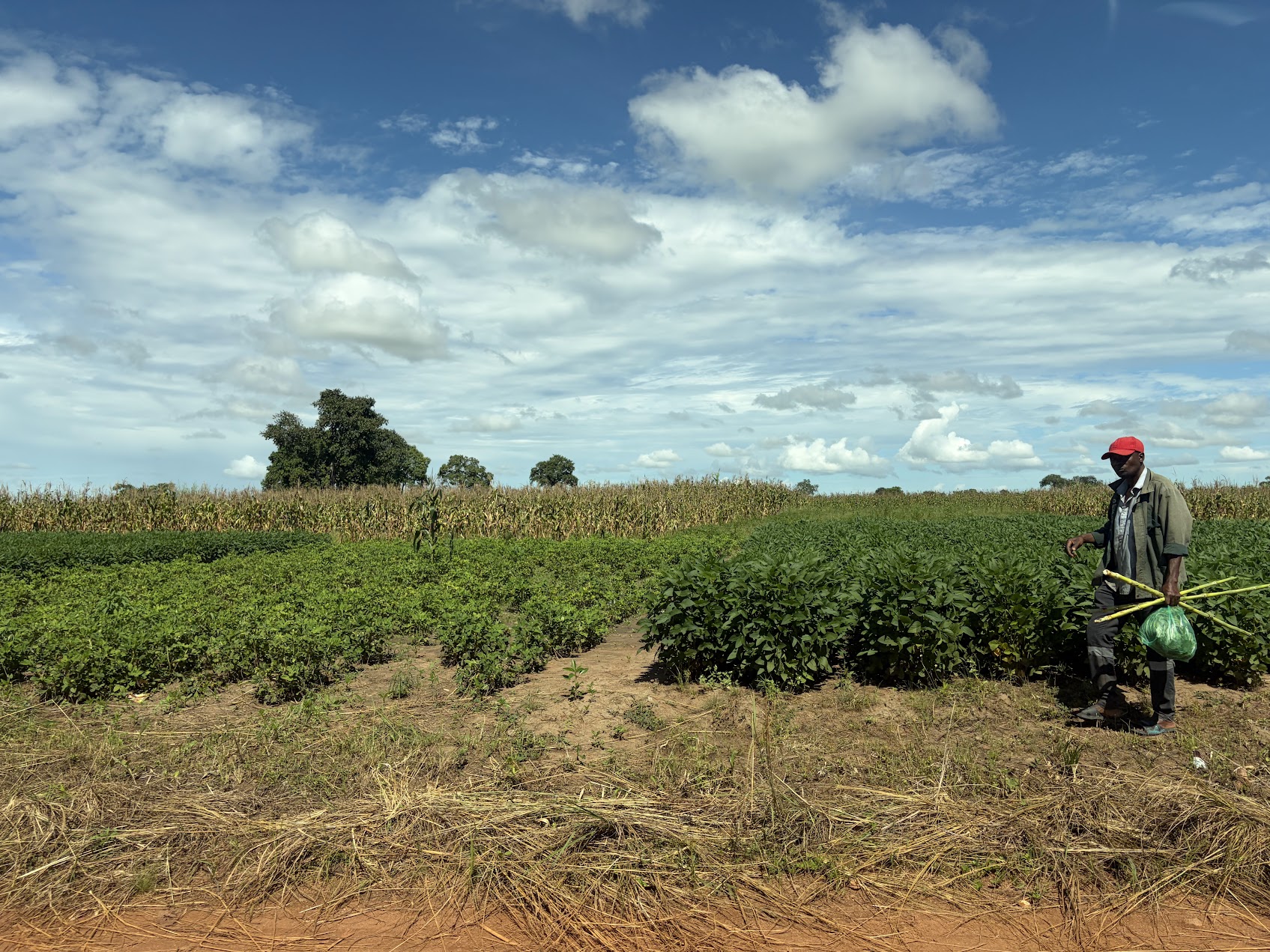
Diversification of crops allows communities to strengthen food security and incomes, improving resilience to climate shocks. Photo: Marcela Portocarrero Aya / World Bank 2026
A few weeks ago, alongside community members and farmer groups in Zambia’s Eastern Province, we were reminded of a simple truth that sometimes gets lost in discussions about climate finance and carbon markets: ultimately, everything we do is for people.
The communities we were visiting are part of the Eastern Province Jurisdictional Sustainable Landscapes Program (EP JSLP), supported by the World Bank Group’s BioCarbon Fund Initiative for Sustainable Forest Landscapes (ISFL). At its core, EP JSLP is an Emission Reductions Program designed to generate verified, high integrity emission reductions – or ‘carbon credits’ - that can be monetized through carbon markets. But on the ground, its impact is far more tangible.
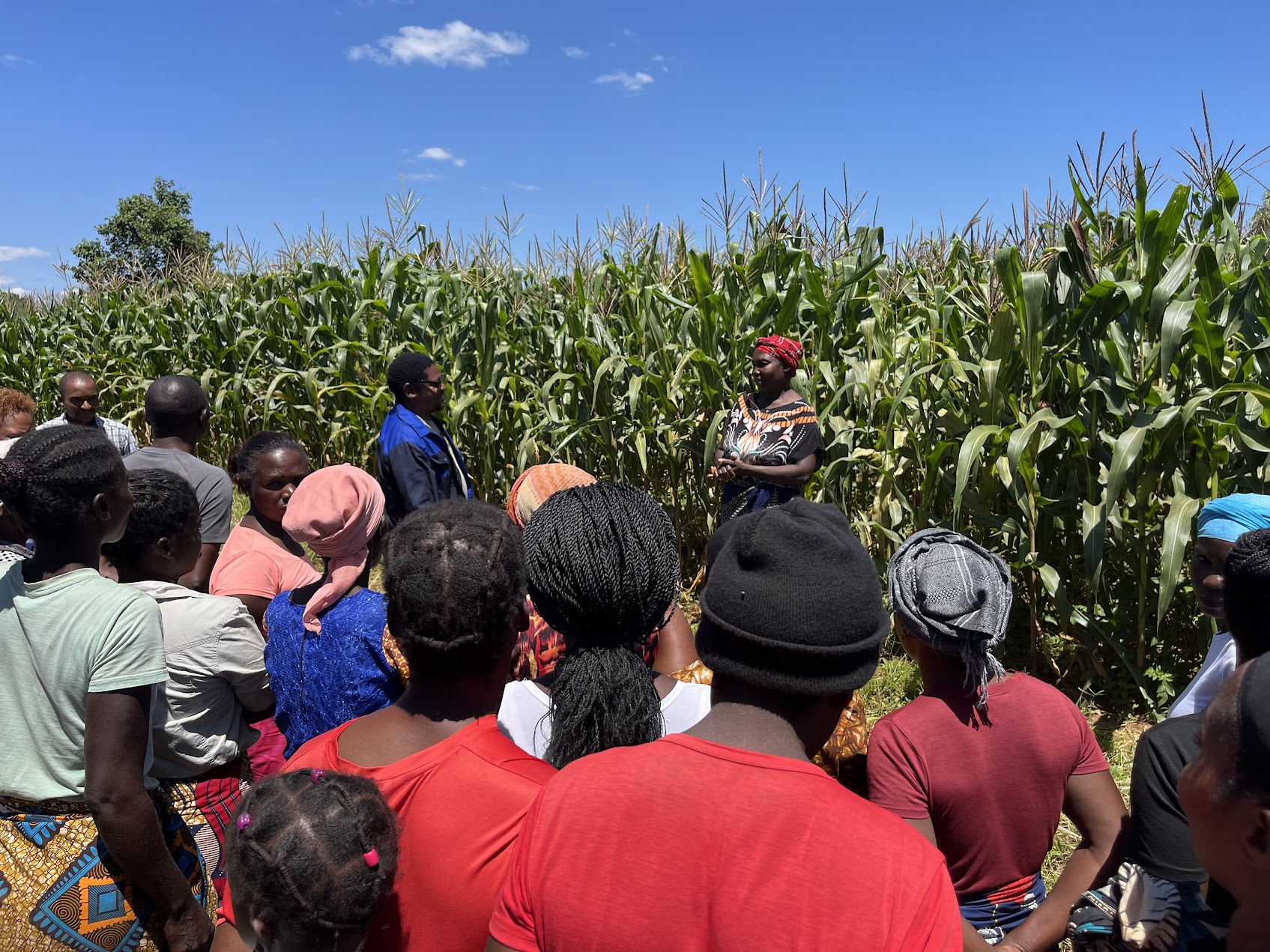
A community leader shares her success story as lead farmer in the implementation of climate-smart agriculture practices. Photo: Marcela Portocarrero Aya / World Bank 2026
The emission reductions generated through the program will be independently verified and paid for. Crucially, the proceeds will return to communities across the province, supporting livelihoods, strengthening production systems, and helping maintain and create jobs. These revenues are not standalone climate payments; they reinforce years of investments in sustainable agriculture, forest management, and local institutions.
EP JSLP builds on the achievements of the Zambia Integrated Forest Landscapes Program (ZIFLP), which laid the foundation for today’s results. Over eight years, ZIFLP enabled approximately 73,000 farmers to adopt climate smart agriculture practices across a predominantly rural region where more than 70 percent of the population lives in poverty. The outcomes have been striking. In 2024—amid a historic drought—average crop yields increased by more than 30 percent, incomes rose by nearly 50 percent, and returns to labor reached between 2.5 and 4.5 times the national poverty line. At the same time, forests across large areas of the province are now being managed more sustainably.
These results show what is possible when climate considerations are embedded in broader development strategies. Rather than treating climate mitigation as an add on, the ISFL program in Zambia applies a jurisdictional approach—working at the scale of an entire province to strengthen land governance, support smallholders, improve agricultural productivity, protect forests, and put benefit sharing mechanisms in place. This approach has allowed Zambia not only to reduce emissions, but also to build resilience in the face of increasingly frequent climate shocks.
In 2024, Zambia signed an Emission Reductions Purchase Agreement with the World Bank, unlocking up to US$30 million in carbon payments for verified results. Any emissions reductions generated over and above those contracted under the agreement with the World Bank can be sold to third party buyers, creating further revenue streams that flow back to the very communities whose actions made those results possible.
Seeing these impacts firsthand—speaking with farmers and community leaders—brings home what those figures truly represent: more stable livelihoods, stronger food security, and greater confidence in the future. Zambia’s experience is not unique. Similar stories are unfolding across other countries participating in ISFL, demonstrating that climate finance can move beyond readiness and pilots to deliver verified, large scale results that work for people and the planet alike.
This is why this work matters. And this is why we do it.